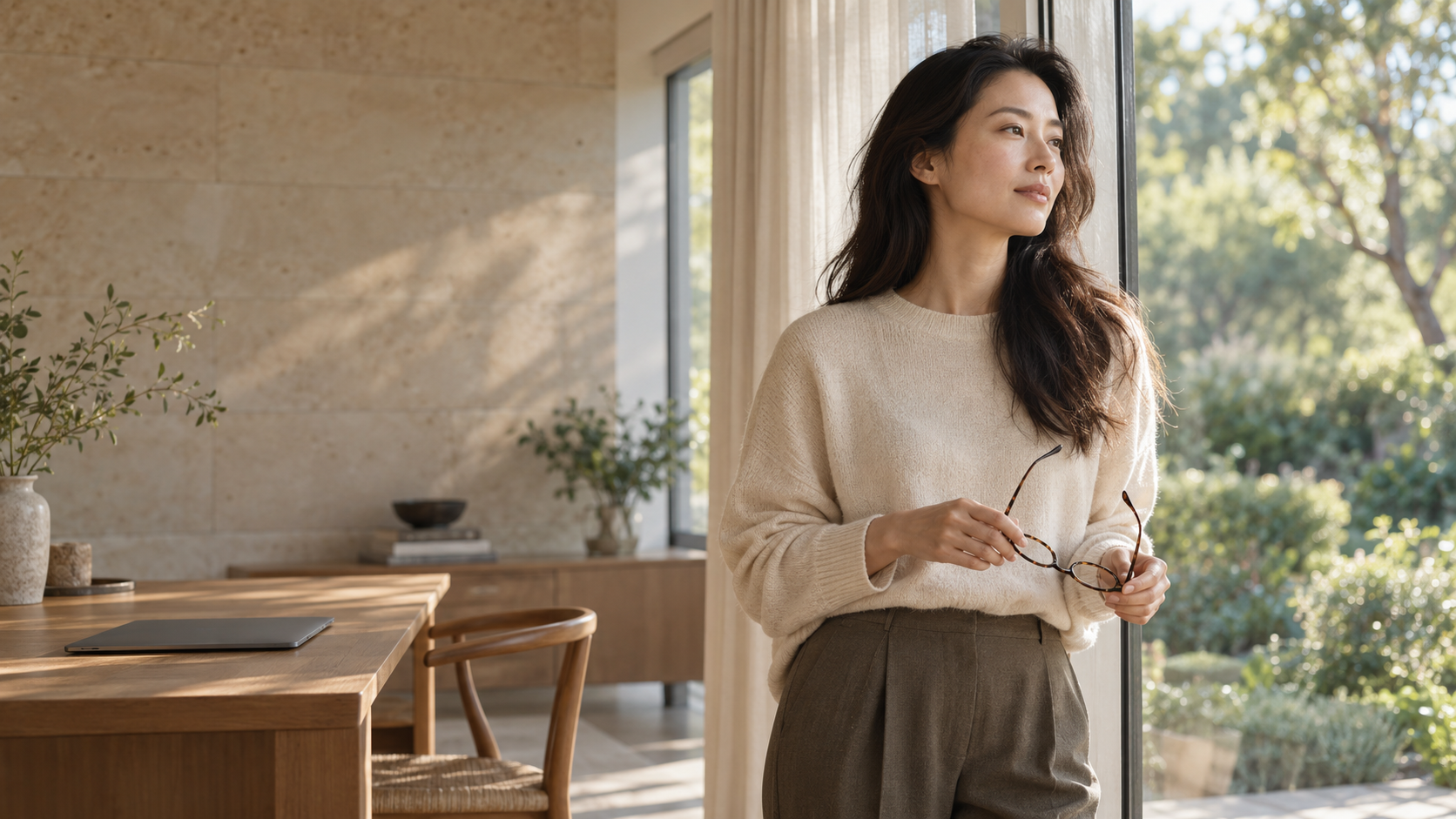
A DELIBERATE PAUSE FROM NEAR FOCUS DAILY VISUAL RECOVERY
01 / 04 Rest The Focus
02 / 04 Protect From UV
03 / 04 Nourish Wisely
04 / 04 Check Regularly
01 / 04
Rest the focus
02 / 04
Protect from UV
03 / 04
Nourish wisely
04 / 04
Check regularly
0 1 / D A I L Y P R O T E C T I O N
Small rituals. Meaningful relief.
Comfort begins with the environment around the eyes. Give near-focus work a rhythm, allow the tear film to recover through complete blinking, and position light and screens to minimise glare—not to chase perfection, but to reduce accumulated visual load.
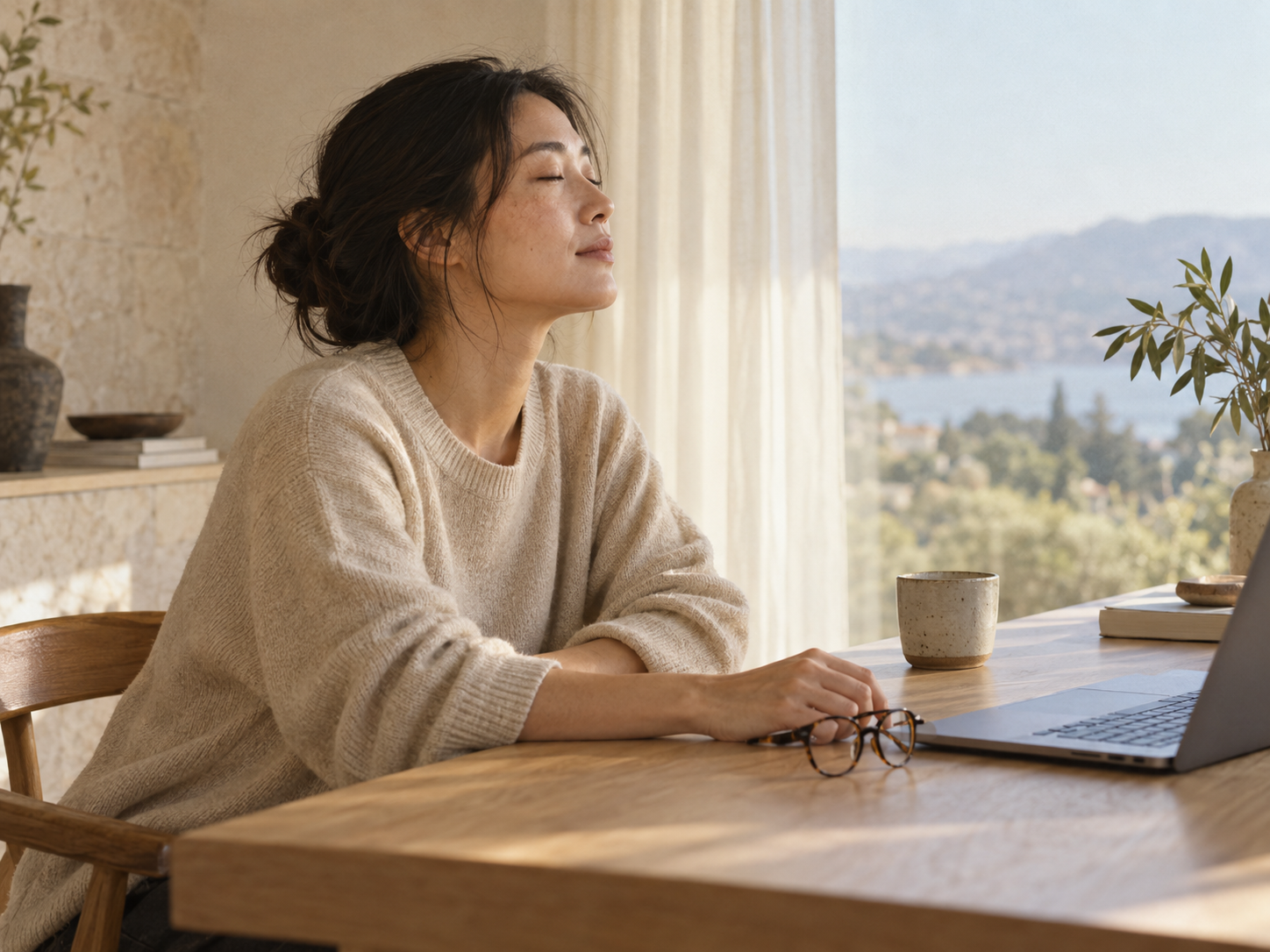
T W E N T Y S E C O N D S O F D I S T A N C E
R E S T T H E F O C U S I N G S Y S T E M
REST THE FOCUSING SYSTEM TWENTY SECONDS OF DISTANCE
01 / 03
The 20–20–20 Rhythm
Interrupt sustained near focus.
Every 20 minutes, look at something about 20 feet away for at least 20 seconds. Use the pause to blink slowly and fully. It is a practical comfort habit for long screen sessions, not a substitute for an eye examination.
02 / 03
Light Without Glare
Let the room support the task.
Balance screen brightness with the surrounding room, avoid direct reflections, enlarge text before leaning forward, and keep the display roughly an arm’s length away with the top at or slightly below eye level.
03 / 03
Tear-Film Care
Blink, hydrate, and notice dryness.
Screen concentration can reduce blinking. Make complete blinking intentional, maintain normal hydration, and seek professional advice when dryness, burning or fluctuating vision becomes frequent or persistent.
01 / 03
The 20–20–20 Rhythm
Interrupt sustained near focus.
Every 20 minutes, look at something about 20 feet away for at least 20 seconds. Use the pause to blink slowly and fully. It is a practical comfort habit for long screen sessions, not a substitute for an eye examination.
02 / 03
Light Without Glare
Let the room support the task.
Balance screen brightness with the surrounding room, avoid direct reflections, enlarge text before leaning forward, and keep the display roughly an arm’s length away with the top at or slightly below eye level.
03 / 03
Tear-Film Care
Blink, hydrate, and notice dryness.
Screen concentration can reduce blinking. Make complete blinking intentional, maintain normal hydration, and seek professional advice when dryness, burning or fluctuating vision becomes persistent.
0 2 / E V I D E N C E - A W A R E S U P P O R T
Support vision with context, not hype.
A varied diet, appropriate daylight exposure and purposeful rest support overall visual wellbeing. Supplements, however, should be matched to a person’s needs—especially when specific clinical formulas are involved.

C O L O U R, V A R I E T Y, W H O L E - F O O D C O N T E X T
N U T R I T I O N B E F O R E N O V E L T Y
C O L O U R, V A R I E T Y, W H O L E - F O O D C O N T E X T
THE FOOD MATRIX
Let the plate carry the first conversation.
Leafy greens, eggs, berries, colourful vegetables and nuts bring eye-relevant nutrients into a broader dietary pattern—alongside fibre, healthy fats and other protective compounds.
N U T R I T I O N B E F O R E N O V E L T Y
Lutein & Zeaxanthin
These carotenoids are concentrated in the macula and occur naturally in dark leafy greens, broccoli, peas, brightly coloured produce and eggs. Build them into a balanced diet rather than treating one nutrient as a universal cure.
0 1
0 2
Antioxidant-Rich Foods
Vegetables, fruit, nuts, seeds and other nutrient-dense foods supply vitamins and protective compounds that support general health, including eye health. Dietary variety matters more than a single “hero” ingredient.
0 3
Daylight & Distance
For children, regular outdoor time is associated with a lower risk of developing myopia. At any age, alternating close tasks with distance viewing gives the visual system a more varied working environment.
0 4
UV Protection
Choose sunglasses labelled to block 99–100% of UVA and UVB radiation, even on cloudy days. A close-fitting frame and brimmed hat can provide additional shade and reduce glare.
A P R E C I S I O N N O T E
AREDS2 is not a general multivitamin.
The AREDS2 formulation—including specific amounts of lutein and zeaxanthin—has evidence for reducing progression risk in certain people with intermediate or late age-related macular degeneration.
It is not proven to prevent eye disease in everyone. An optometrist or ophthalmologist should advise whether this clinical formulation is appropriate for you.

P R O T E C T I O N B E Y O N D T H E S C R E E N
99 - 100 % U V A & U V B B L O C K I N G
PROTECTION BEYOND THE SCREEN 99-100% UVA & UVB BLOCKING
O U T D O O R S T A N D A R D
Sunlight is natural. UV protection should be intentional.
Choose sunglasses that state 99–100% UVA and UVB protection. A well-fitting frame and brimmed hat can reduce peripheral light and glare—without turning everyday protection into a complicated ritual.
0 3 / W H A T T O A V O I D
The habits that quietly add strain.
Not every uncomfortable habit causes permanent damage, but repeated friction, unprotected exposure and delayed attention can turn manageable discomfort into a pattern. Remove the obvious stressors first.
0 3 / W H A T T O A V O I D
The habits that quietly add strain.
Not every uncomfortable habit causes permanent damage, but repeated friction, unprotected exposure and delayed attention can turn manageable discomfort into a pattern. Remove the obvious stressors first.
0 1
Forceful eye rubbing
Unbroken near work
0 2
0 3
UV without protection
0 4
Poor sleep & recovery
Ignoring new symptoms
0 5
BLUE- LIGHT REALITY CHECK.
Current ophthalmology guidance does not show that light from ordinary digital screens damages the eyes. Screen discomfort is more often linked to reduced blinking, glare, viewing distance and prolonged near focus. Night-time screen use may still affect sleep, so comfort and sleep hygiene remain worthwhile.
0 1
Rubbing can aggravate irritation and transfer dirt or microbes. If itching is persistent, address the cause with an eye-care professional rather than repeatedly rubbing the surface.
Forceful eye rubbing
Long, concentrated screen or reading sessions can intensify dryness, blur, headache and fatigue. Add frequent short pauses instead of relying only on one long break.
Unbroken near work
0 2
0 3
UV without protection
Do not confuse screen blue light with solar ultraviolet radiation. Outdoors, use verified UVA/UVB protection; ordinary blue-light glasses are not a substitute for UV-rated sunglasses.
0 4
Poor sleep & recovery
Insufficient sleep can worsen perceived eye fatigue and comfort. Give the visual system a stable nightly recovery window and reduce intense close-up stimulation before bed.
Persistent blur, pain, redness, headaches, double vision or sudden changes deserve professional assessment. Routine dilated eye examinations may detect conditions before obvious symptoms appear.
Ignoring new symptoms
0 5
BLUE- LIGHT REALITY CHECK.
Current ophthalmology guidance does not show that light from ordinary digital screens damages the eyes. Screen discomfort is more often linked to reduced blinking, glare, viewing distance and prolonged near focus. Night-time screen use may still affect sleep, so comfort and sleep hygiene remain worthwhile.
A L O N G E R V I E W
“Protect what your eyes meet every day—
and notice when they ask for care.”
A L O N G E R V I E W