A Healthy Gut Is More Than a Bacterial Count
Microbial function, diversity and resilience all matter.
The gut is a complex ecosystem. There is no single ideal microbiome for everyone, and a higher bacterial count alone does not establish better health.
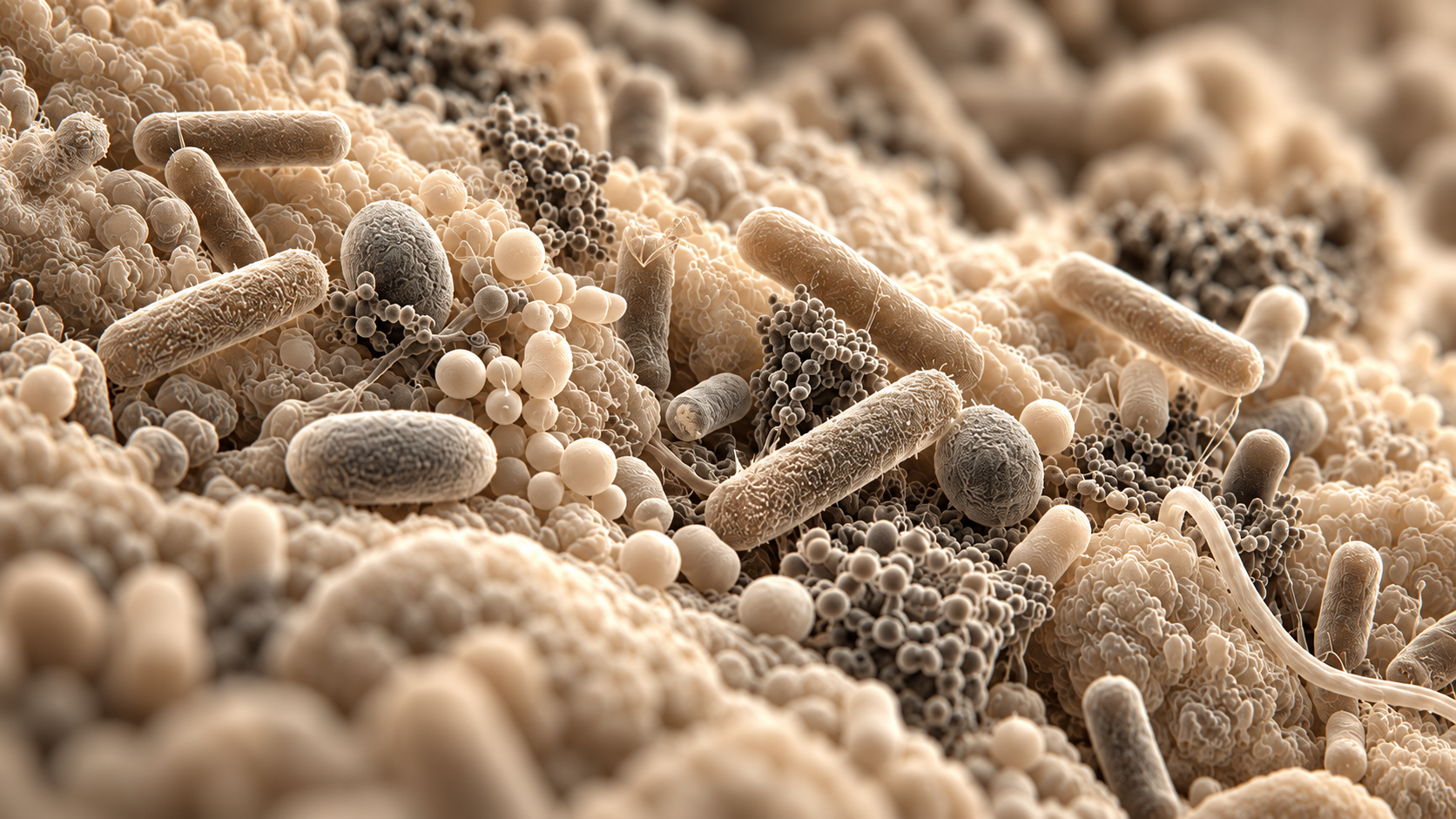
Some gut microbes help break down food and produce useful compounds. Probiotic effects depend on the strain and its intended use.
Beneficial Microbes
01 / 03
02 / 03
Microbial Diversity
Microbial variety is one feature of the gut ecosystem. Diversity alone does not define health; function and context also matter.
03 / 03
Lifestyle Influences
Diet, medicines, sleep and stress can influence the gut environment. Consistent daily habits support overall well-being.
A Healthy Gut Is More Than a Bacterial Count
Microbial function, diversity and resilience all matter.
The gut is a complex ecosystem. There is no single ideal microbiome for everyone, and a higher bacterial count alone does not establish better health.
Some gut microbes help break down food and produce useful compounds. Probiotic effects depend on the strain and its intended use.
Beneficial Microbes
01 / 03
02 / 03
Microbial Diversity
Microbial variety is one feature of the gut ecosystem. Diversity alone does not define health; function and context also matter.
03 / 03
Lifestyle Influences
Diet, medicines, sleep and stress can influence the gut environment. Consistent daily habits support overall well-being.
· NUGASTRO3 ·MICROBIOME SCIENCE ·THREE DISTINCT ROLES
The Tri-Biotics Ecosystem.
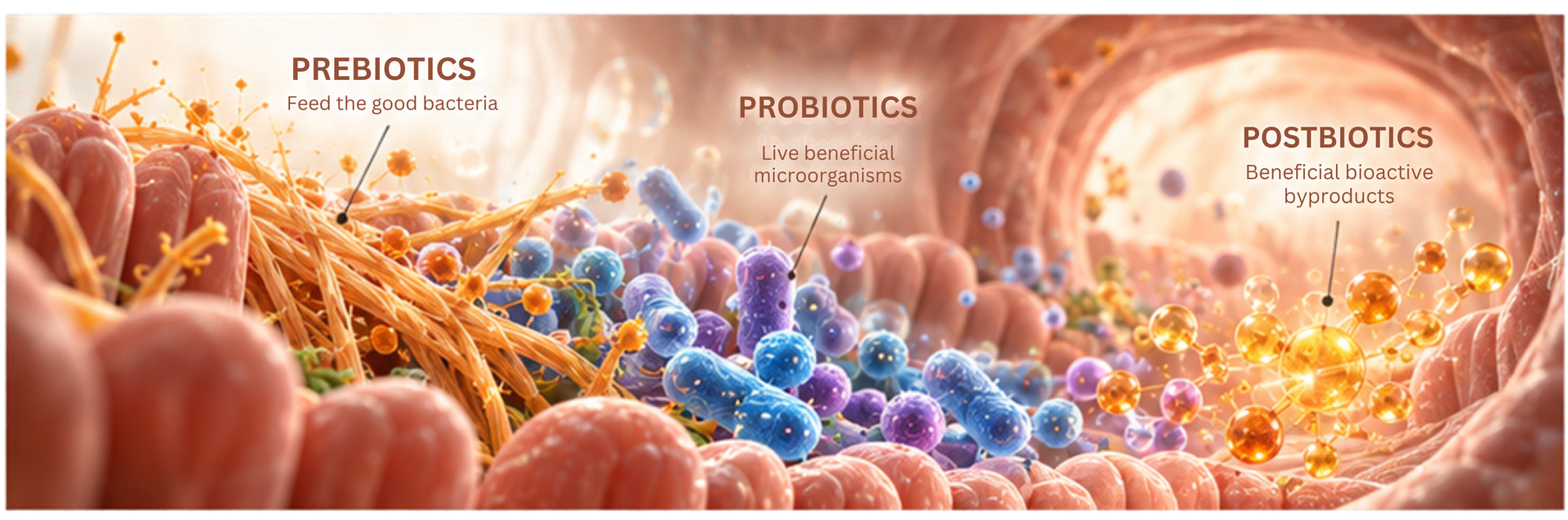
Prebiotics, probiotics and postbiotics are related—but they are not interchangeable. Each is defined by a different biological role, evidence requirement and formulation challenge.
An evidence-conscious guide to understanding how substrates, live microorganisms and preparations of inanimate microorganisms differ.
One ecosystem.
Three definitions.
Modern microbiome science is more precise than the familiar idea of “good bacteria.” The quality of a tri-biotics formulation depends on what each component is, whether it meets its scientific definition, and whether the finished product preserves the conditions required for its intended function.
01 / T H E S C I E N T I F I C T R I A D
02 / 03
Probiotics
“Live microorganisms that, when administered in adequate amounts, confer a health benefit on the host.”
A probiotic must be alive at the relevant point of use, identified with sufficient precision, delivered at an adequate amount and supported by evidence for the intended benefit. Effects cannot automatically be transferred from one strain—or one combination—to another.
THE LIVE MICROORGANISM
01 / 03
Prebiotics
“A substrate that is selectively utilised by host microorganisms, conferring a health benefit.”
Prebiotics are not simply all dietary fibres. A candidate must be selectively used by microorganisms in or on the host, and that utilisation must be linked to a demonstrated benefit. Commonly studied examples include certain fructans and galacto-oligosaccharides, but qualification depends on evidence—not category alone.
THE SELECTIVELY UTILISED SUBSTRATE
03 / 03
Postbiotics
“A preparation of inanimate microorganisms and/or their components that confers a health benefit on the host.”
A postbiotic is not merely a purified metabolite or any heat-treated culture. The preparation must contain inanimate microbial cells and/or their components, be characterised, and have evidence for a health benefit. Metabolites may be present, but they do not define the category by themselves.
THE INANIMATE MICROBIAL PREPARATION
· NUGASTRO3 ·MICROBIOME SCIENCE ·THREE DISTINCT ROLES
The Tri-Biotics Ecosystem.
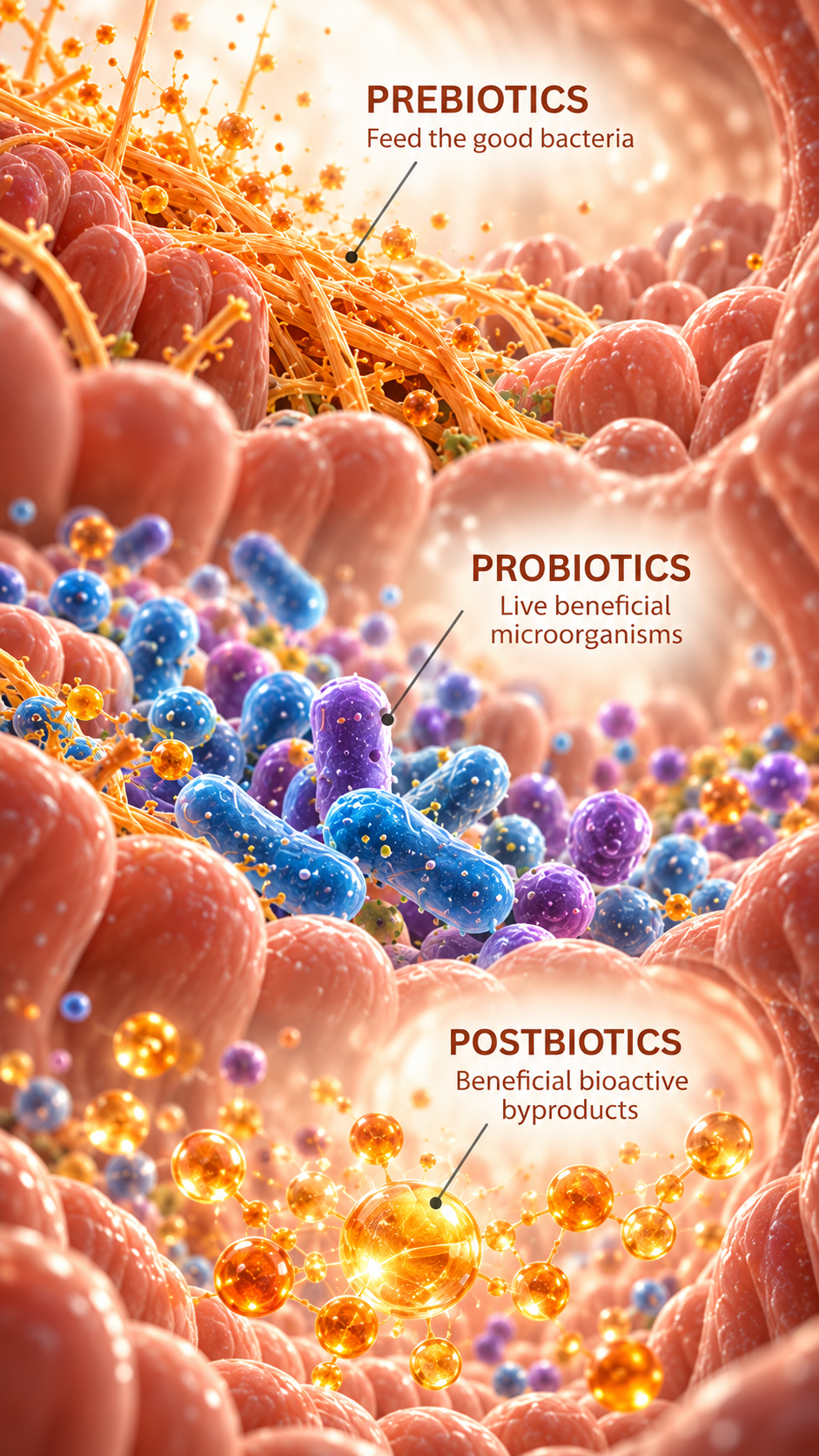
Prebiotics, probiotics and postbiotics are related—but they are not interchangeable. Each is defined by a different biological role, evidence requirement and formulation challenge.
An evidence-conscious guide to understanding how substrates, live microorganisms and preparations of inanimate microorganisms differ.
One ecosystem.
Three definitions.
Modern microbiome science is more precise than the familiar idea of “good bacteria.” The quality of a tri-biotics formulation depends on what each component is, whether it meets its scientific definition, and whether the finished product preserves the conditions required for its intended function.
01 / T H E S C I E N T I F I C T R I A D
02 / 03
Probiotics
“Live microorganisms that, when administered in adequate amounts, confer a health benefit on the host.”
A probiotic must be alive at the relevant point of use, identified with sufficient precision, delivered at an adequate amount and supported by evidence for the intended benefit. Effects cannot automatically be transferred from one strain—or one combination—to another.
THE LIVE MICROORGANISM
01 / 03
Prebiotics
“A substrate that is selectively utilised by host microorganisms, conferring a health benefit.”
Prebiotics are not simply all dietary fibres. A candidate must be selectively used by microorganisms in or on the host, and that utilisation must be linked to a demonstrated benefit. Commonly studied examples include certain fructans and galacto-oligosaccharides, but qualification depends on evidence—not category alone.
THE SELECTIVELY UTILISED SUBSTRATE
03 / 03
Postbiotics
“A preparation of inanimate microorganisms and/or their components that confers a health benefit on the host.”
A postbiotic is not merely a purified metabolite or any heat-treated culture. The preparation must contain inanimate microbial cells and/or their components, be characterised, and have evidence for a health benefit. Metabolites may be present, but they do not define the category by themselves.
THE INANIMATE MICROBIAL PREPARATION
02 / T H E I N T E S T I N A L S Y M P H O N Y
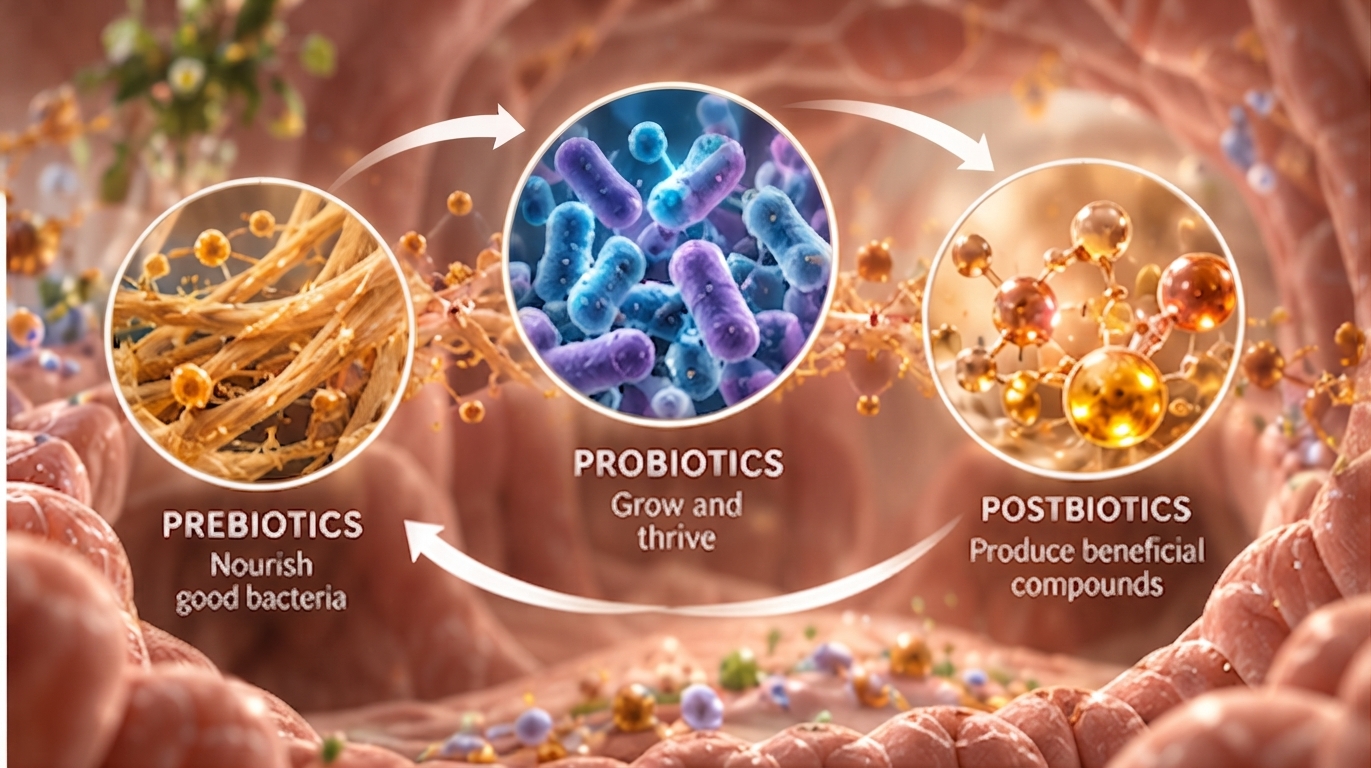
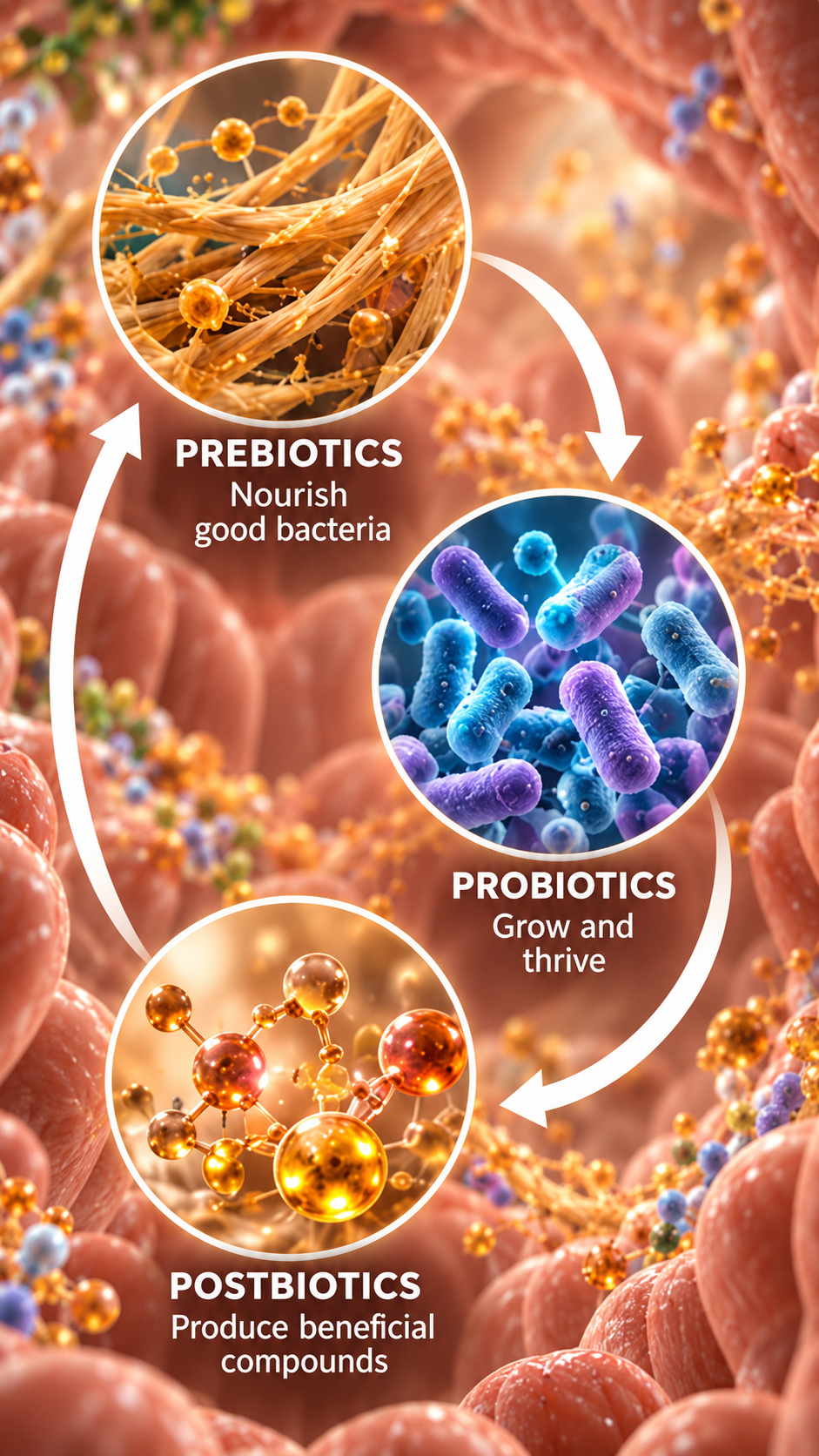
A Continuous, Self-Sustaining Biological Loop
Prebiotics feed probiotics and together they generate prebiotics. True gut wellness is not about a single isolated ingredient, but a continuous, self-sustaining biological loop that supports systemic vitality from within.
02 / T H E I N T E S T I N A L S Y M P H O N Y
A Continuous, Self-Sustaining Biological Loop
Prebiotics feed probiotics and together they generate prebiotics. True gut wellness is not about a single isolated ingredient, but a continuous, self-sustaining biological loop that supports systemic vitality from within.
0 3 / A C L E A R E R C O M P A R I S O N
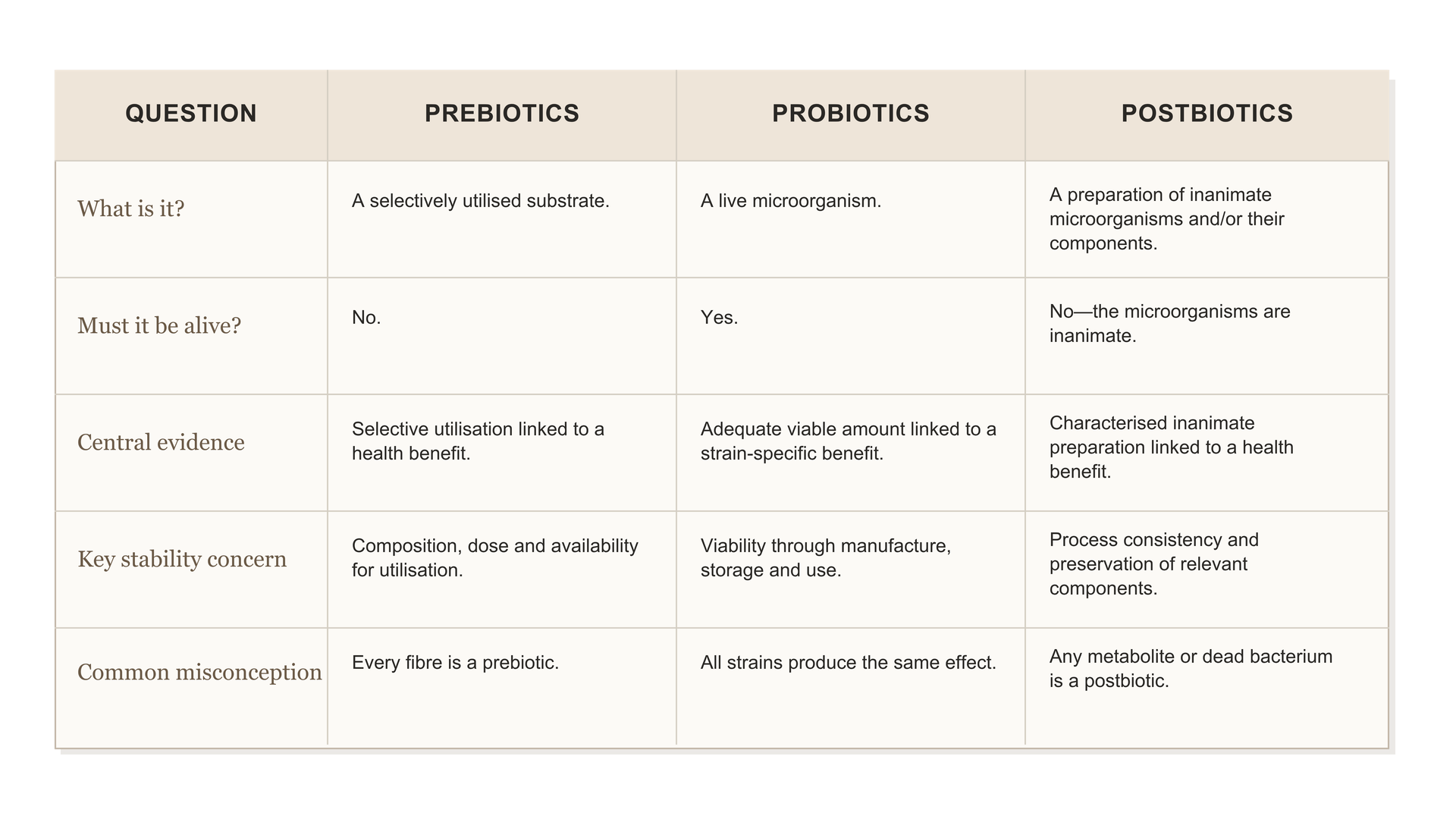
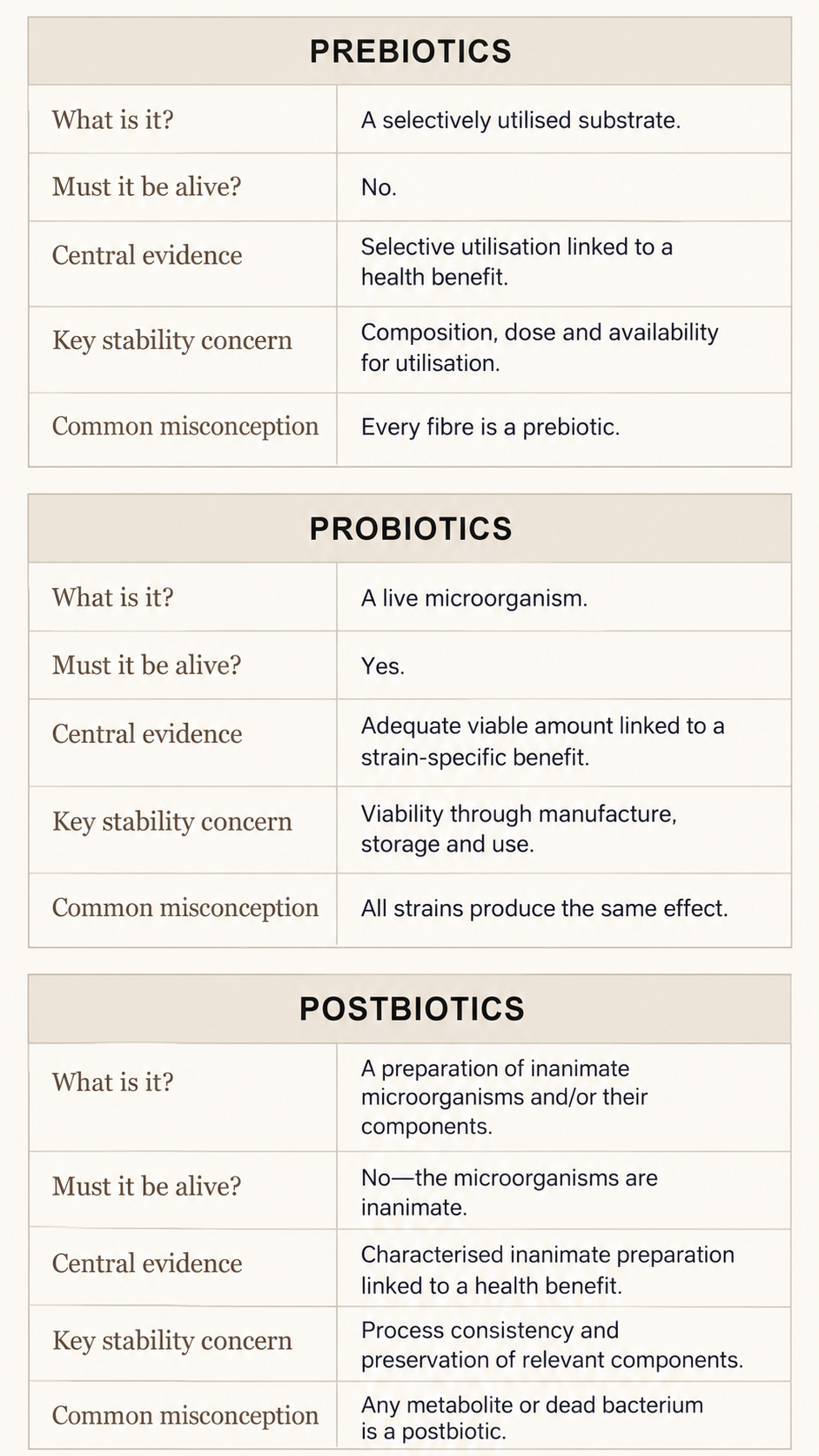
Three categories, three quality questions.
Names on a label are only the beginning. The meaningful questions concern identity, dose, stability, evidence and whether the finished product delivers what the formulation promises.
0 3 / A C L E A R E R C O M P A R I S O N
Three categories, three quality questions.
Names on a label are only the beginning. The meaningful questions concern identity, dose, stability, evidence and whether the finished product delivers what the formulation promises.
01
Identity
State the prebiotic substrate, probiotic genus–species–strain and postbiotic preparation clearly.
0 4 / E V I D E N C E B E F O R E O R N A M E N T
What makes a microbiome formulation credible?
Premium design should make science easier to inspect, not hide it. A responsible product page should identify the material precisely and connect every claim to the exact ingredient, amount, population and outcome studied.
02
Amount
Disclose meaningful quantities and, for probiotics, the viable count at the appropriate point in shelf life.
03
Stability
Control moisture, temperature, packaging and processing conditions relevant to each component.
04
Evidence
Match wording to the specific ingredient or combination studied—without borrowing unrelated outcomes.
Useful distinctions, without the microbiome mythology.
No. A prebiotic must be selectively utilised by host microorganisms and that utilisation must confer a health benefit. Many fibres are valuable parts of the diet without meeting this specific definition.
Not necessarily. The important factors are strain identity, viable amount, stability and evidence for the intended outcome. A larger number of strains does not automatically create a stronger or more suitable product.
Many probiotic strains are detected only temporarily after consumption. A benefit does not require permanent colonisation, but it does require evidence for the specific strain and use.
No. Inactivation alone is insufficient. The preparation must be characterised and supported by evidence that it confers a health benefit.
No. The combination may offer complementary roles, but synergy is a testable scientific claim and should be supported by evidence on the finished combination.
0 4 / F R E Q U E N T L Y A S K E D